Deployment
Homefront Encouragement

Homefront Resources
Send us your stories!
Military caregiver support & resources
Return to PTSD Resource Directory - LINK
Return to Wounded Warrior Resource Directory - LINK
Return to Books for the Military Community & Supporters - LINK
Scroll down for more information on:
Support and resources
Tools to coordinate care
Books
American Red Cross
Military and veteran caregiver network, for caregivers of all eras, all relations, across all locations.
Blue Star Families
The Blue Star Caregivers Program was created to offer a time and space to focus on yourself and establish bonds with fellow military caregivers.
We hope you enjoy the following opportunities and resources in an effort to take time for you and continue your education in the caregiving space.
- Caregivers Empowering Caregivers Workshops
- Caregiver Coffee Connect
- Digital Resources
Camp Bliss (Walker, MN)
Camp Bliss is an incredible retreat and vacation destination in Walker, Minnesota.
Camp Bliss is part of Independent Lifestyles, Inc., a non-profit organization committed to providing independence and choices for people with disabilities, their families and communities. Founded in 1997, we have provided services to thousands of people throughout Central Minnesota and beyond. Retreats are available to veterans and people with disabilities, while others are open to the general public. The public retreats and private rentals help us offset the cost of providing retreats for veterans and people with disabilities at low or no cost. We are located in beautiful Walker, MN on 48 forested acres between 3 scenic lakes. Our 7,600 sq. ft. lodge is totally accessible, with 7 bedrooms & 4 bathrooms, the Bliss House also accessible with 3,500 sq. ft., 7 bedrooms & 4 bathrooms, just 200 feet from the lake and we have quaint 500 sq. ft. Cabin overlooking the lake with 1 bedroom & a loft which has a nice sandy beach just steps away.
Care.com
We're mothers, fathers, pet owners, sons, daughters, grandchildren, friends, and members of this online community along with you. We understand the difficulties and struggles you face when trying to find the right care and services for your families, yourself, and your home. Care.com provides a trusted place for families and care providers to easily connect, share caregiving experiences, and get advice. The company addresses the unique lifecycle of care needs that each family may go through — including child care, special needs care, tutoring, senior care, pet care, housekeeping and more. The service enables families to find and select the best care possible based on detailed profiles, background checks, and references for hundreds of thousands of mom-reviewed providers who are seeking to share their services.
Caregiver Action Network
The Caregiver Action Network is the nation’s leading family caregiver organization working to improve the quality of life for the more than 65 million Americans who care for loved ones with chronic conditions, disabilities, disease, or the frailties of old age. CAN serves a broad spectrum of family caregivers ranging from the parents of children with special needs, to the families and friends of wounded soldiers; from a young couple dealing with a diagnosis of MS, to adult children caring for parents with Alzheimer’s disease. CAN (formerly the National Family Caregivers Association) is a non-profit organization providing education, peer support, and resources to family caregivers across the country free of charge.
Caregivers on the Homefront
The purpose of Caregivers on the Homefront Inc. is to serve those families who are caring for the warriors of all military eras and first responders who have been inflicted with the invisible and/or physical wounds of the wars abroad or at home. This organization will solicit donations, partner with other local nonprofits, and provide support to our caregivers and their families. Programs include education, retreats, well-being, and support groups.
Caring From a Distance
Caring From a Distance (CFAD) is an organization for long-distance caregivers.
Are you one of the 6.9 million Americans struggling to care for an aging parent or other loved one who lives in a far-away city? If you are, we are here to help.
Whether you live across-the-world or an hour away, you and your family face special challenges. Where can you find the local resources they require? How can you, family and friends communicate in an emergency? What can you do to help when you visit? CFAD is here to help:
- If you are in a crisis and need assistance fast, click on Service Directories to find local help. We'll get you to a local professional or a telephone counselor.
- If you need to learn more about elder care and distance caregiving, just click on What To Do or Library.
- If you need to talk over upcoming decisions, you can organize a free conference call to share concerns and latest news.
Caring from a Distance is an independent, non-profit organization. We take no referral fees from service providers.
Coalition to Salute America's Heroes
HEROES THANKING HEROES
The Coalition to Salute America's Heroes' internal employment program, Heroes Thanking Heroes, provides a six month transitional part-time, flexible employment to wounded veterans or their primary caregivers. This unique job enables them to make phone calls from their homes, most often to personally thank donors for their contributions to the Coalition to Salute America’s Heroes. The program also offers qualified participants basic training and experience working in a “virtual call center,” thereby preparing them for other potential jobs requiring similar skills.
VETERAN’S CAREGIVER ALLIANCE
The mission of the VCA is to improve the quality of life for the caregivers of our nation’s combat-wounded veterans. We will guide caregivers through all services available while identifying and filling gaps in those services. We will work with likeminded veterans service organizations (VSOs), government agencies and community initiatives to assure that the needs of caregivers are being met, both privately and publicly. A key to our success must be strengthening the care and compassion that caregivers share with each other, and to do all we can to support them.
Easterseals
Caregiving is in Easterseals’ DNA — it’s at the heart of everything we do. This is especially true in our services and supports for military veterans and their families.
We strive to ensure military caregivers can access what they need to take on the enormous responsibility of caregiving—often, while still needing to work, navigate family life and take care of themselves. We embrace and support military caregivers, particularly as they transition into this new experience, life-long trajectory and unfamiliar — yet vital role — within their families and communities.
Our national network supports military caregivers across the lifespan. From training to respite services, Easterseals makes a profound, positive and life-changing difference in people’s lives every day.
Services include:
- Free Military Caregiving Webinars
- Military Caregiver Training
- Center-based Adult Day Services or in-home services
- Respite care
- Community OneSource Call Center
Family Caregiver Alliance
Family Caregiver Alliance is a public voice for caregivers. Our pioneering programs--information, education, services, research and advocacy--support and sustain the important work of families nationwide caring for loved ones with chronic, disabling health conditions.
Fisher House
Supporting America's military in their time of need, we provide "a home away from home" that enables family members to be close to a loved one at the most stressful time -- during hospitalization for an illness, disease or injury. There is at least one Fisher House at every major military medical center to assist families in need and to ensure that they are provided with the comforts of home in a supportive environment.
Because members of the military and their families are stationed worldwide and must often travel great distances for specialized medical care, Fisher House Foundation donates "comfort homes," built on the grounds of major military and VA medical centers. These homes enable family members to be close to a loved one at the most stressful times - during the hospitalization for an unexpected illness, disease, or injury.
Healing Household 6
The mission of HH6 is to connect caregivers of US veterans with the essential resources needed to strengthen the family support foundation. Our goal is to build resilient households by focusing on the well being of the family, helping to alleviate household tension, and empowering caregivers and children.
Caring for a wounded veteran is a full time job. Here at HH6 we know firsthand about the struggles caregivers face on a daily basis. Where do you turn to for help? What organizations can assist your family during a crisis? We understand even a phone call for assistance can be overwhelming with all the information that you are asked to repeat. When you are learning to navigate the VA system or a medical evaluation board, it becomes mentally and physically exhausting. Yet, it doesn’t have to be. From injury to transition we will guide you through the process of making the most of the adventures that lie ahead for your family in your time of need. Our Caregiver Case Managers consist of experienced caregivers and family advocates that can provide reputable resources and assist you through hardships. We have conquered medical evaluation boards, VA claims, transition, public assistance, nonprofit assistance, domestic violence and caring for our own wounded veterans. Although Caregiver life can feel lonely, you are not alone!
Some programs:
The HH6 Closet connects caregivers and children in need of clothing with other veteran families who are able to donate new or gently used clothing in similar sizes for both the caregiver and child. In most cases these items are provided by one of our partners (Gorgo’s Boxes). In rare cases where no other families can meet the needs of the request, HH6 will purchase new or gently used items to meet the need.
Operation Housekeeping is designed for the caregiver that A. need assistance with household chores during transition or B. suffers a medical injury/surgery and cannot provide a clean environment for their family or veteran due to such emergency. HH6 will cover the cost of a weekly cleaning of up to 4 weeks with recommendation from a certified physician.
There are certain situations where are caregivers cannot safely remain in the home with their injured veteran due to child abuse, physical abuse or emotional abuse. Often the caregiver has no source of income as he/she has been providing care to the veteran and is unemployed. The Life after Caregiving program will assist with finding resources in the caregivers area to assist with re-location and financial planning along with offering emergency shelter or travel payments. Copy of a police report is required within 15 days of issuance of funds.
Heal the Warriors
We will help you learn what you need to know about TBI and about providing sustainable care without sacrificing your own well-being. Heal the Warriors, through our workshops, seminars and online tools, helps you avoid the typical caregiver pitfalls. We are there to guide you through out your caregiving journey.
Hearts of Patriots
Hearts of Patriots seeks to honor veteran spouses by recognizing their sacrifice in the support of their loved one injured during service to our country. Their mission is to provide education, resources and services to spouses and families of Veterans suffering from PTSD (Post Traumatic Stress Disorder) and (Traumatic Brain Injury) TBI.
Hearts of Patriots Adopt a Veteran Caregiver for the holidays program - Holidays can be a critical time for spouses and families of PTSD veterans suffering from invisible wounds of war. Learn more... LINK
Hidden Heroes
Hidden Heroes brings vital attention to the untold stories of military caregivers and seeks solutions for the tremendous challenges and long-term needs they face. Our goals:
- Raise awareness of the issues military caregivers confront every day
- Inspire individuals, businesses, communities, and civic, faith and government leaders to take action in supporting military caregivers in their communities
- Establish a national registry, encouraging military caregivers to register at HiddenHeroes.org to better connect them to helpful resources and support
Respite Relief for Military and Veteran Caregivers - The Elizabeth Dole Foundation created this nationwide program which offers family caregivers of veterans or service members access to free, short-term relief with the help of in-home care professionals.
Hope for the Warriors - Military Spouse Scholarships & Caregiver Scholarships
Hope For The Warriors Spouse / Caregiver Scholarship Program celebrates and rewards the spouses and caregivers of post-9/11 veterans for their strength, fidelity and resolve as they take on new and critical roles after experiencing the impact of war on their families. These scholarships provide aid in continuing education at reputable, accredited universities, colleges or trade schools.
HunterSeven Foundation (Providence, RI)
The HunterSeven Foundation Immediate Needs Program has supported post-9/11 veterans and their families in the following ways:
Proactive wellness
- Functional medicine appointments.
- Imaging and laboratory studies.
- Access to specialized programs across the nation.
- Medical care and recovery
Inpatient/outpatient care not covered by insurance.
- Medications not covered by insurance.
- HBOT, SGB treatments
- Caregiver support
Travel expenses during treatments.
- Survivor costs not covered.
- Pending, unpaid medical bills.
Lone Survivor Foundation Therapeutic Retreats
Lone Survivor Foundation is committed to providing support to service members and veterans struggling with invisible injuries such as combat trauma stress, mild traumatic brain injury, chronic pain management and military sexual trauma. These painful injuries have devastating effects on the individual as well as their family. LSF’s goal is to support both the individual and the family through education, coping skills and reducing their symptoms of stress.
To that end, LSF conducts retreats throughout the year with a focus on wellness and therapeutic support. Retreats are conducted over a five day weekend (Thursday fly in, Monday fly out) at scenic facilities, allowing ample opportunity for the healing effect of nature and relaxation. We serve all military branches and backgrounds; Our focus is toward combat stress, mTBI and chronic pain issues, with an emphasis on service members and veterans from Operation New Dawn, Operation Enduring Freedom and Operation Iraqi Freedom. We conduct individual service member retreats, couples retreats and family retreats, with the goal of taking the individual and family out of their normal environment, open the mind and emotions and provide tools for moving forward successfully. LSF also conducts separate retreats for survivors of Military Sexual Trauma.
Our retreats provide support for invisible injuries through psycho educational groups, Equine Assisted Learning (EAL) using the EAGALA method, as well as individual sessions focused on brief stress reduction exercises to reduce symptoms of traumatic stress and pain.
MarineParents.com Warrior Support Team
Our Warrior Support Team™ (WST) strives to provide resources and fellowship to wounded, ill, and injured troops and veterans, including those living with post-traumatic stress, as well as to provide resources and support to family members.
WST volunteers serve meals, assist at events, provide resources to enhance the comfort of patients, and distribute educational materials at Walter Reed National Military Medical Center in Bethesda, Maryland, and the Naval Medical Center in San Diego, California. We are also exploring other ways to meet the needs of wounded, ill, and injured military and their families in different locations across the country.
Military and Veteran Caregiver Network
The Military and Veteran Caregiver Network provides pre- and post-9/11 military and veteran caregivers with peer support to reduce their isolation and increase their sense of connectedness, engagement, hopefulness, wellness, knowledge and skills.
Military OneSource - Resources for Military Caregivers
When you are a caregiver, each day can bring new questions and new situations, so it’s important that you have access to the support you need — not only for your loved one, but also for you. Caring for a loved one with special needs or a life-changing injury comes with a great deal of responsibility and you may experience a roller coaster of emotions — from happiness to confusion to fatigue. That’s why it’s important to make sure you have access to the necessary resources and support to take care of yourself, too.
Luckily, there are lots of ways to get the support to be an even better caregiver than you already are. With you in mind, Military OneSource conveniently offers resources tailored to your needs in one location. You can find support services, specialty consultations, confidential non-medical counseling and access to a variety of products that can simplify your caregiver responsibilities.
MOAA's Tips for Lifelong Caring
The website has been developed for and by caregivers and represents the collective needs, personal experiences, and struggles faced in planning for contingencies and emergencies — information regarding military and veterans’ benefits, finances, and legal issues during or after transitioning from the military the members of the caregiver advisory panel wished they had known as they began their roles as caregivers.
NAMI Homefront (National Alliance on Mental Illness)
NAMI Homefront is a free, 6-session educational program for families, caregivers and friends of military service members and vets with mental health conditions. Based on the nationally recognized NAMI Family-to-Family program, NAMI Homefront is designed to address the unique needs of family, caregivers and friends of those who have served or are currently serving our country. The program is taught by trained family members of service members/veterans living with mental health conditions.
National Caregiver Support Line 1-855-260-3274
The Department of Veterans’ Affairs is pleased to announce the launch of a toll-free National Caregiver Support Line 1-855-260-3274. The Caregiver Support Line was created to recognize the significant contributions made by caregivers allowing veterans to remain at home surrounded by family and friends.
Open Monday through Friday 8:00 a.m. to 11:00 p.m. and Saturday 10:30 a.m. to 6:00 p.m. Eastern Time; licensed clinical social workers will be available to answer your questions, listen to your concerns and directly link you to the Caregiver Support Coordinator at your local VA Medical Center. Each VA Medical Center has a Caregiver Support Coordinator who can locate assistance tailored to your unique situation.
No Barriers USA
No Barriers Caregiver Program is designed to improve the lives of family caregivers by building a caregiving community where individuals are given dedicated time and space to be together with other family caregivers through transformative, curriculum based virtual workshops and community events as well as in-person retreats and expeditions.
Operation Family Caregiver
Operation Family Caregiver is a program of caregiving that provides free, confidential, one-on-one coaching to caregivers in military families
Operation Gratitude's Care Packages for Care Givers
Military wounded heroes and caregivers - request a care package for yourself or for your wounded hero.
Operation Homefront - Veteran Caregiver Support
OH Veteran Caregiver Support (formerly known as Hearts of Valor or HOV) is a network of people caring for wounded, ill or injured service members and veterans, created and maintained by Operation Homefront. We seek to support caregivers by facilitating online groups that provide social connection to other caregivers in similar situations, fostering support groups by location to encourage resource sharing and friendships, and sponsoring annual retreats to provide education on relevant issues.
Operation Never Forgotten
Operation Never Forgotten helps veterans and families strive for happier, healthier, peaceful and productive lives after war. Caregivers are welcome to attend with or without their veteran. Accommodations, food, speakers and activities are FREE for pre-approved veterans and caregivers. Travel to an ONF event is not included however paid airfare will be considered on a case-by-case basis.
ONF events are alcohol-free.
Each transition workshop may promote physical, psychological and spiritual wellness; and decompression through relaxing or thrilling outdoor recreational therapy; and mentorship. Each event will vary depending on location, time of year, guest speakers, activities and budget. Most events are held in Montana. Caregivers are equally supported and some workshops include programs for children.
These events are managed by veterans and caregivers… for veterans and caregivers.
Operation Second Chance
Operation Second Chance recognizes the stress families experience from combat-related trauma and the importance of strong family support. We see the struggles that take place with families trying to reconnect and regain the "normal" in life after returning home from a warzone with severe injuries. We also understand how a positive attitude can impact the recovery process. One of the many ways OSC assists our wounded warriors and their families is by providing retreats that facilitate this part of the recovery process. We actively work to get wounded warriors and their families out of their hotel rooms and the hospital environment to help them relax and reconnect.
We offer two different types of retreats depending on the individual's injuries and their ability to get away. We provide short local overnight trips to those who need a quick getaway but do not have the ability to go very far from the care received at the hospital or from their chain of command. We also provide week-long retreats for those who are further along in their recovery and are able to get away for longer periods. During our retreats we offer many different activities for the individuals to choose from, as well as give wounded warriors and their families the opportunity to rest, relax and complete activities on their own. All OSC retreats are all-inclusive and have no cost to our recovering service members and their families.
We tailor separate trips that cater to:
- Individual injured service members
- Couples
- Families
- Women veterans
- Caregivers
If you are a disabled veteran interested in attending one of these retreats please complete the retreat application.
Operation Showers of Appreciation's Unspoken Heroes Program
Unspoken Heroes is a set of assistance programs created to support our nation’s silent heroes, our veterans, veteran caregivers, Gold Star families and Blue Star moms. These programs allow our local communities an opportunity to support our Unspoken Heroes and thank them for their sacrifices and offer support and resources to them.
Operation Veteran Caregiver Support (Ohio)
Welcome to Operation Veteran and Caregiver Support! We are a small non-profit doing big things in the Miami Valley of Ohio, as well as all over the country. We are here to help veterans and their caregivers understand the resources that are available to them, that they have earned due to their service to our country, and to help them use those resources to transform their quality of life. We connect them to organizations that can help, provide tangible services like yardwork and meal delivery, and create meaningful interactions to encourage them to plug into their local veteran community.
Patriot's Cove (Noxen, PA)
Patriots Cove is a native brook trout sanctuary nestled in the mountains of northeast Pennsylvania. We were established in 2017 to protect a threatened fish species, and provide a place for veterans, first responders, and their caregivers to enjoy a therapeutic fishing outdoors experience. Our organization gives injured veterans and first responders a place to reconnect with nature and heal within.
Fishing retreats are held year-round, and private group events are also encouraged, to give much-deserved individuals a tranquil outdoors experience. Regardless of injuries or illnesses incurred from the line of duty, our guests can enjoy easy access to stream-side trout fishing.
As of fall 2018, caregivers will also have the opportunity to join us for social events and educational workshops. As a military spouse, we understand how difficult it might be to find resources and tools for caregiving education and training. Patriots Cove will give Caregivers the skills and confidence to support their wounded hero, and help them build a social network of fellow caregivers.
Register for your fishing retreat: patriotscove.org
PsychArmor Institute (Free online education for supporters of military caregivers)
PsychArmor provides a unique training and support program for individuals caring for veterans that is both 100% free and completely online.
At PsychArmor we aim to bridge the military-civilian divide by ensuring that every American has the tools and resources needed to engage effectively with service members and veterans. PsychArmor is the only national institute of its kind, dedicated to bridging the civilian-military divide through FREE ONLINE education and a support center staffed with mental-health experts.
PsychArmor recruits nationally recognized subject matter experts to create and deliver online courses about issues relevant to the military and veteran communities. Our self-paced courses are delivered within six schools geared toward military culture, healthcare providers, employers, educators, volunteers, caregivers and families. We provide critical resources to all Americans who work with, live with, and care about veterans.
Reel Wives (Midland, TX)
Reel Wives is an expansion of the Reel Thanx program which reaches out to the wives and children of the men that come into the Reel Thanx program. We believe these wives are true heroes too.
Reel Wives began in 2010 as a way to reach out to the Reel Thanx soldier's wife and family. While he was away for the weekend on his fishing trip, Reel Wives would send a gift basket loaded with goodies to his wife back home. Those involved with Reel Wives dreamed of the day that enough support could be generated to bring those women in for their own weekend retreat.
With the gracious help and support from the great people of West Texas and surrounding areas, those who were already involved and those who began to hear about Reel Wives helped make that dream a reality. In October 2011, Reel Wives brought their first group of wives in for an all expense paid weekend of pampering and fun. We also strive to provide them with love and nurturing, and emotional support as we share their laughter and their tears. We recognize that it is not only their husbands who are wounded by the effects of war. It takes time for wounds to heal, especially those that can't be seen on the outside. We want these wives to have a weekend where they can focus just on themselves; a little down time that they rarely get at home. Along with their husbands, they have sacrificed much for our country and this is our way of trying to give a little back to them.
Rosalyn Carter Institute for Caregivers
The Rosalynn Carter Institute for Caregivers works to reach more caregivers, in more ways, and in more places.
Salute America's Heroes Road to Recovery Conference and Tribute
The Road to Recovery (R2R) Conference and Tribute is a multi-day all expenses paid educational and motivational event for wounded veterans and their families to enable them to approach the future with hope and to be better prepared for the challenges that lie ahead. It features seminars, workshops and panel discussions where attendees learn about resources and services available. Experts from government, private sector and other veteran-focused non-profit groups and corporations offer advice and guidance on: career counseling and transition, caregiver support, family counseling and enhancing personal relationships.
Semper Fi Fund
Semper Fi Fund’s Caregiver Support Program encompasses a variety of activities designed to assist the spouses, parents, siblings, extended family members and close friends who drop everything to care for a catastrophically wounded, critically ill or injured service member.
Soldiers Angels' - Women of Valor Team
THE WOMEN OF VALOR TEAM
The Women of Valor program focuses on the female caregivers of post-9/11 wounded, ill and injured service members and veterans. The caregivers may be the wife, girlfriend, mother or other female relative of the wounded hero. Our team of Angels focus on giving support, encouragement and “Angel Love” to the ladies of the Women of Valor program. With the challenges that caregivers face on a daily basis, the love and encouragement offered by their Team Angels provides them with that extra little bit of strength and inspiration.
TELEHEALTH SERVICES FOR CAREGIVERS
After much research and many calls to telehealth providers, we are excited to announce that we will be funding a new telehealth program for caregivers and working with MDLIVE to provide the care! Upon signing up, our caregivers will be able to set up appointments online using either a computer, tablet, or phone to see a doctor for either medical or behavioral health. MDLIVE’s behavioral health services offer licensed therapists that are able to help with anxiety, depression, PTSD, bipolar, stress management, relationship issues, and more. Medical appointments will include visits with a doctor relating to non-emergency conditions like common cold, allergies, headache, sore throat, fever, flu, etc. The best part: Soldiers’ Angels will be funding these services at no cost to those caregivers registered for our Women of Valor Program!
Special Compensation for Assistance with Activities of Daily Living (SCAADL)
Special Compensation for Assistance with Activities of Daily Living (SCAADL) was authorized by the Fiscal Year 2010 National Defense Authorization Act. This special monthly compensation is for servicemembers who incur a permanent catastrophic injury or illness. SCAADL helps offset the loss of income by a primary caregiver who provides non-medical care, support, and assistance for the servicemember. Read more in the WTC SCAADL fact sheet.
STEP (Support the Enlisted Project)'s Wounded Warrior Caregiver Support (Southern California)
Behind every wounded warrior stands another courageous yet silent hero. The wives of our wounded service members stand strong and tall despite the challenges they face as they take on new roles as lifelong caregivers. These brave women are often forced to give up their careers and time with friends as they work around the clock to ensure their husbands receive the care and support that they need. Their lives are far from normal and more difficult than anyone could imagine. STEP organizes and hosts several events throughout the year to pay tribute to these extraordinary women. Whether it's a spa day at the luxurious La Costa Resort & Spa in Carlsbad or a fun-filled day at the San Diego Zoo, our retreats provide these women with a quick getaway to relax, rejuvenate, and reconnect with other women who understand their pain and struggles.
The Barbara McNally Foundation sponsors SPA Days
SPA (Support, Purpose & Appreciation) day for the Wives of Wounded Warriors happens twice a year at the Hotel Del Coronado and is growing to take place throughout the U.S. It's an opportunity for military wives who have been supporting their husbands to have a day just for themselves to restore and rejuvenate. This program gives the wives a day where they are pampered and can enjoy the fellowship of other wives struggling with the same challenges. Guest speakers and resources enhance lunch by the pool after spa treatments.
The Carrying On Project
For generations, the practice of babywearing has made caring for children easier while helping them develop or maintain life-long bonds with caregivers. The goal of the Carrying On Project is to help get carriers to the families of our military so that they may better obtain secure attachments with their children, something that deployment and injuries will often interrupt. We seek to assist both the service members and the families left behind in “Carrying On” while both home and away, to make something that is difficult for the whole family a little bit easier.
The Independence Fund
The Independence Fund is proud to serve caregivers of all eras. By providing small group retreats, the caregivers to our nation’s heroes are given a break from the stressful 24/7 role of military caregiving through time for peer-to-peer support, respite, as well as restorative and pampering services.
Our typical demographic is comprised of young wives who are caring for husbands with life-altering battle wounds that decades earlier would have resulted in death, but we are also excited to care for other populations among the heroic caregiver community. In 2015, The Independence Fund hosted the first ever national retreat for male caregivers; fathers, husbands, and brothers of our nation’s wounded. In 2016 and 2017, The Independence Fund hosted nine caregiver retreats across the nation, and we have continued to offer respite, support, and services to those caregiving for our nation's heroes.
Traumatic Brain Injury - The Caregiver's Journey (CEMM Virtual Library)
Welcome to The Journey Home - the CEMM Traumatic Brain Injury (TBI) Website. This site provides an informative and sensitive exploration of Traumatic Brain Injury (TBI), including information for patients, family members, and caregivers. Topics include types and symptoms of brain injury, TBI treatment and recovery, and helpful insights about the potential long-term effects of brain injury. Animation is used to help patients clearly understand the brain, and the results of injuries to different parts of the brain. Survivors and their caregivers share courageous stories about their own experiences, providing down-to-earth facts along with inspiration and hope.
U.S. Army Warrior Transition Command
Family members and Caregivers play an important role in a wounded, ill or injured Soldier's recovery and transition. They provide emotional support and stability and assist the Soldier in navigating available benefits and programs.
WTU cadre understand the importance of Soldiers' Families and Caregivers and view them as key contributors for each Soldier's recovery and transition. When possible, Family members and Caregivers should attend appointments with the Soldier and collaborate with the Soldier's Triad of Care and other providers.
VA Caregiver Support
VA knows your focus as a family caregiver is taking care of the veteran you love. It can be an incredibly demanding job, and we want you to know you don't have to do it alone. Learn more about the support and services VA offers family caregivers. Includes: Caregiver Stories, Caregiver Toolbox, Caregiver Support Line, Local Caregiver Support Coordinator, and more.
VA Caregiver Support - New Services for Family Caregivers of Post-9/11 Veterans
Family caregivers provide crucial support in caring for veterans. VA recognizes that family caregivers in a home environment can enhance the health and well-being of veterans under VA care.
Under the "Caregivers and Veterans Omnibus Health Services Act of 2010," additional VA services are now available to seriously injured post-9/11 veterans and their family caregivers through a new program of Comprehensive Assistance for Family Caregivers. VA is now accepting applications for these services.
New Services Available to Family Caregivers through this Program - The new law will provide additional assistance to primary family caregivers of eligible post-9/11 veterans and servicemembers. New services for this group include:
- Monthly stipend
- Travel expenses (including lodging and per diem while accompanying veterans undergoing care)
- Access to health care insurance (if the caregiver is not already entitled to care or services under a health care plan)
- Mental health services and counseling
- Comprehensive VA caregiver training provided by Easter Seals
- Respite care (not less than 30 days per year)
Vail Veterans Program - Military Caregiver Programs
Three-day program will be offered to caregivers of wounded warriors. They will stay in world-class lodging and participant in self-awareness programs, yoga, meditation, outdoor recreation, spa treatments, and group meals to connect with others. The retreat will provide time for caregivers to rejuvenate, take time for themselves, and create new friendships.
Veteran CareGiver
Veteran CareGiver was developed squarely in response to expressed challenges by Wounded Warrior and veteran families, and Veterans Affairs leadership. While no single entity or group can respond flawlessly to the individual matters faced by each Veteran due to sheer enormity of the task, families have openly spoken about their altered lives in the face of injury, illness, or aging. At times, feeling isolated, faced with multiple simultaneous issues, and needing answers, they also have expressed needs beyond survival.
Caregivers may create a personal profile that reflects their interests, and share progress and friendship with photos.
Warrior Bonfire Program - Strong Heart Spouses Retreats
Our spouses' retreats are full of rest and relaxation to help energize and motivate our most treasured caregivers of our modern-day heroes. These women have an opportunity to listen and learn from each other, with the ultimate goal of finding support. Many of our veterans have asked for help to find ways to repay their spouses and we are working to answer their call. If you are a spouse of a post 9/11 Purple Heart veteran, please sign up here to enjoy one of our weekends.
Warrior Care
The Department of Defense (DoD) provides resources and information exclusively for military caregivers who assist wounded, ill and/or injured service members with activities of daily living. DoD’s Military Caregiver Support includes the Military Caregiver PEER Forum Initiative(Personalized Experiences, Engagement, and Resources), the Caregiver Resource Directory, monthly Military Caregiver Virtual Forums, as well as Military Caregiver webinars, events and specialized resources.
Warriors and Quiet Waters (Bozeman, MT)
You deserve respite and support - We provide a safe, supportive environment, connect military caregivers to nature in a meaningful way, and teach them how to fly fish while equipping caregivers with the gear, skills, and knowledge to continue to fly fish when they return home.
Well Spouse Association
A home for the husbands, wives and partners of those with any chronic illness, disease or disability. We hope you will find the information presented here easy to navigate and helpful in your caregiver journey.
Wounded Warrior Project - Veteran Family Support Programs
The transition from service member to civilian is not easy. Thankfully, many of our warriors have people like you—parents, siblings, caregivers and more who go above and beyond to help them.
So we’re helping you in return. By providing guidance on VA benefits, and a variety of other programs, we empower you with the tools you need to be there for your warriors.
Wounded Warriors Family Support - Respite Care Program for the Caregiver and Veteran
Caring for a wounded veteran can be demanding physically, psychologically and financially. Oftentimes caregivers are spouses or family members who have many other responsibilities, such as work, managing bills and taking care of children. Caregivers of veterans often spend long hours caring for their loved one, feel high levels of stress and neglect their own personal health.
Wounded Warriors Family Support’s Caregiver Respite Program provides respite and supplemental services nationwide to the caregivers and families of wounded war veterans. Our program aims to ensure that family members who were thrust into the role of caregivers are provided with the support they need to keep their families intact while keeping themselves healthy.
Wounded Warriors Family Support respite services include providing secondary caregiver assistance, respite aid for remote areas and short-term temporary relief in the form of childcare and other services. The program also provides assistance in enrolling in the Department of Veterans Affairs Caregiver Support Services and other agencies offering resources and support.
Yellow Ribbon Fund - Family Caregiver Program (Nationwide)
There are over 1,100,000 military caregivers* assisting post 9/11 service members in the United States. Yellow Ribbon Fund’s Keystone Program provides support for military caregivers in chapters around the country.
Through our Keystone Program, we offer a foundation of resources for military caregivers. Often, their own needs are set aside as they manage families, careers, and finances, and the daily medical journey of their service member.
Yellow Ribbon Fund’s Keystone Program provides military caregivers with a foundation rooted in three core keys:
- Career Development Program
- Health & Wellness
- Respite
- Family Disney Trips
- Family Wellness Retreat
- Education
The supportive structure of a caregiver is essential to our wounded, ill and injured service members during their recovery and successful transition into civilian life. Yellow Ribbon Fund provides transitional services and training for caregivers and their families, at any point throughout their journey.
Tools to coordinate care - Professional resources
Academy for Inclusive Care (online courses)The Campaign for Inclusive Care is a strategic joint initiative of the U.S. Department of Veterans Affairs (VA) and Elizabeth Dole Foundation (EDF), graciously supported by USAA, to embrace, engage, and empower caregivers, clinicians, and Veterans throughout the entire care journey from day one.
These educational courses are designed to shift culture of care at VA hospitals to include caregivers on their wounded warriors’ medical team, reduce the challenges of being a caregiver, and ultimately improve health outcomes for both our veterans and caregivers. Create your account today and begin the four module series.
Tools to coordinate care - Additional resources
- www.LotsaHelpingHands.com - Free, private, web-based communities for organizing friends, family, and colleagues – your ‘circles of community’ – during times of need. Easily coordinate activities and manage volunteers with our intuitive group calendar.
- www.CareCalendar.org - CareCalendar is a web based system to organize meals and other help for families during a time of illness or life changing event, such as the birth of a baby or death of a family member. CareCalendar can also be used for long term situations, including homebound and caregiver respite care needs.
- www.TakeThemAMeal.com - TakeThemAMeal.com is an free online tool for coordinating the delivery of meals to loved ones. If someone is ill, elderly, or has had a new baby, oftentimes family, friends, co-workers, church members rally around these families to take them meals. In the past, one person would coordinate (by phone or e-mail) the scheduling of the meals. Now, the meal coordinator can use TakeThemAMeal.com to allow the meal deliverers to sign up for the day or days when they will deliver meals to the meal recipients.
- www.MealTrain.com - MealTrain.com is a free solution that simplifies the organization of giving and receiving meals. By allowing the giving party to take into account the recipient’s preferred meal times, food preferences, and available days, the site helps ensure that the recipient gets the meals they enjoy on the days that are most helpful.
Books for the military caregiver
Benita Koeman of Operation We Are Here is a participant in the Amazon Services LLC Associates Program, an affiliate advertising program designed to provide a means for sites to earn advertising fees by advertising and linking to Amazon.com. When you purchase a product that is linked to Amazon, I earn a small commission which in turn helps me to continue with my mission of providing resources to the military community and military supporters. Learn more...



Copyright 2008 - 2022 Benita Koeman, Operation We Are Here. All rights reserved.
Operation We Are Here is a HUB of RESOURCES for the military community and military supporters.
Military support is not a concept to embrace; military support is sacrificial action. Visit our military support TOOLKIT.
A Stranger in My Bed
8 steps to taking your life back from the contagious effects of your veteran's post-traumatic stress disorder
Author: Debbie Sprague, Copyright @ 2013
A Stranger in My Bed takes you inside Debbie Sprague’s life for an intimate view of a love story disrupted by the invasion of PTSD—thirty years after the Vietnam War. The cycle moves from love to fear, anger, and despair. Stories unfold of her husband’s battle with PTSD, displaying typical behaviors, triggers, and moods. Those familiar with this world will be comforted: “That sounds just like my life, and I thought I was the only one.” Others will find a new awareness: “I had no idea it was like that.”
You will watch a family and marriage almost be destroyed by the contagious effects of PTSD. Yes, PTSD is “contagious”—the family can take on the symptoms, even to the point of full-blown PTSD. Debbie was one of those people.
When she finally sought help, two different therapists advised her to get a divorce. Walk away from her husband? He was only nineteen when he fought for his country. What if we all walked away?
She chose to stay and stand by her values, next to the man that she vowed to love, honor, and care for in sickness and in health. And it almost destroyed her.
With God’s help, she received strength to overcome her fear and anger. She became compassionate and forgiving to her husband. But most of all she learned to cherish the life God had given her by regaining her health and happiness, realizing it was necessary to have the physical and emotional strength to care for her husband.
As Debbie began to discover resources and find solutions for her problems, she found that many other people were suffering as well. She realized sharing those solutions was her life purpose—what she had been preparing for her entire life. Debbie’s gift to you is A Stranger in My Bed: 8 Steps to Taking Your Life Back From The Contagious Effects Of Your Veteran’s Post-Traumatic Stress Disorder.
A Walk Through the Dark
How my husband's 90 minutes in heaven deepened my faith for a lifetime
Author: Eva Piper, Copyright @ 2013
One day Eva Piper was an elementary school teacher, the mother of three, the beloved wife of a strong, protective husband.
The next day she stood at the bedside of a broken man who could do nothing but moan in agony and turn his head away from her.
Later she would learn that he had died and actually experienced heaven before being prayed back to life—a true miracle. Don Piper’s testimony, told in the New York Times bestseller 90 Minutes in Heaven, would one day bring hope to thousands. But all that was in the future. Despite family and friends who kept vigil with her, Eva Piper found herself essentially alone. Walking in the dark. And she had always hated the dark.
Though it parallels that of her husband, Eva Piper’s account is quite different from his. It takes readers not to heavenly places but through a very earthly maze of hospital corridors, insurance forms, tiring commutes from home to workplace and hospital, and lonely hours of waiting and worrying. This is the story of a woman learning, step by darkened step, to go places she never thought she could go and growing into a person she never thought she could be. Packed with hard-earned wisdom about what it means to be a caregiver, to open yourself to the care of others, and to rest in God’s provision, this book provides a dependable source of light to help you walk through the dark.
Everything About ME (Military personnel and families edition)
A guide for my future caregivers
Author: Dee Marrella, Copyright @ 2011
With the huge numbers of American soldiers returning from Iraq and Afghanistan with injuries requiring long-term care -- possibly life-long care, this book (print and electronic versions) provides individuals and their families with a way to create a true tool that can be used by any caregiver who ever works with this person. Since family members might not always be available to be the caregiver in a veterans life, this guide will provide even a total caring stranger with a lifetime of knowledge, information and guidance on what the individual desires in the way of caregiving. This book, when completed, will tell all who use it every important fact about them: how "I" feel about life support, my favorite foods, the TV programs I dislike, how I'd like to have my obituary read, and my funeral conducted. When the time comes that a once vibrant individual required round-the-clock caregiving, and may not have a "voice" left o speak with -- this book can be that "voice" tell all who use it everything you want known.
Healing Together
A couple's guide to coping with trauma and post-traumatic stress
Authors: Suzanne B. Phillips and Dianne Kane, Copyright @ 2009
After a traumatic experience, we are told time and time again to take care of ourselves and reach out to the people we love. But what happens when you reach out and your partner can't reach back? This book is for people in relationships where either partner has faced trauma in any of its forms: violence, natural disasters, war, life-threatening accidents, crime, health problems, or loss of a loved one.
One or both partners can use Healing Together to recover from trauma or help their partner recover by understanding the impact of trauma, learning to communicate their needs, managing anger, dealing with traumatic memories, recapturing lost intimacy, and recognizing their resiliency as a couple. The practical, step-by-step program presented in this guide is inspired and informed by the authors' clinical experiences with patients suffering from post-traumatic stress disorder and their work with firefighters and their partners in the aftermath of 9/11. In the wake of tragedy, this book can help you build a resilient relationship and move forward with compassion, hope, and love.
Keeping It All Together
For wounded, ill and injured service members and their families
Keeping It All Together is an organizing notebook for wounded, ill, and injured service members and their families. This tool helps to document and organize the service member's important information during the service member's treatment and recovery.
Sleeping with the War
Author: Melissa Comeau, Copyright @ 2014
Sleeping with the War is a poetic take on life after combat written by the wife of a United States Marine. Melissa Comeau's dark undertaking of the lasting effects of war on her husband are apparent in this stirring collection. War is an ever present character in this piece, separate from the Marine who went to battle. Sleeping with the War is a difficult read; full of heart breaking accounts from the war and the tragic aftermath of the war that comes home. Melissa's writing is fierce and eloquent and conveys the fight with in her heart.
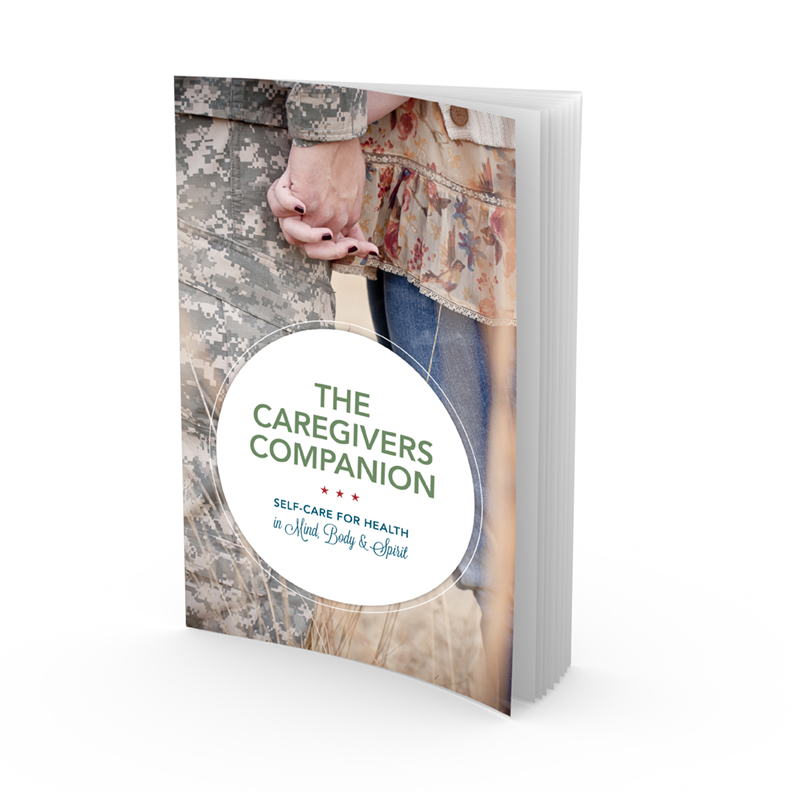
The Caregiver's Companion
Self-care for health in mind, body & spirit
Copyright © 2016 Samueli Institute
The Samueli Institute created The Caregivers Companion: Self-care for Health in Mind, Body and Spirit to support military caregivers in their journey towards greater wellbeing. This requires aligning the body, mind and spirit, as well as creating a system of support.
The Caregivers Companion is designed for all who provide care, offering practical guidance for all military and veteran caregivers, regardless of their relationship to their care recipient, their age, stage or era of service, including spouses, siblings, parents, children, friends, family members and battle buddies.
Samueli Institute (SI) is an expert in the field of healing, selfcare,
and military resilience. For the last 15 years, SI has
worked with partners in the military and Veterans Affairs
to help service members, special operators and veterans
build resilience and recover from the trauma of war. SI is
now leveraging that expertise for a different audience—the
5.5 million family caregivers who are critical to the health
and wellbeing of the nation’s wounded, ill or injured service
members and veterans. Learn more at SamueliInstitute.org.
The Caregiving Wife's Handbook
Caring for your seriously ill husband, caring for yourself
Author: Diane B. Denholm, Copyright @ 2012
A month after proposing marriage, Diana Denholm's husband was diagnosed with colon cancer and later congestive heart failure. Following a heart transplant several of her husband's body systems began failing forcing Diana to become his primary caregiver for more than a decade. The Caregiving Wife's Handbook is a step-by-step communication guide to help women maintain emotional, physical and financial health in their unique role as caregivers to their dying husbands.
Women are suffering physical, emotional and financial burnout as the United States' leading caregivers. Of the 65 million caregivers in the U.S., 66% are women, and these numbers will only increase as the population ages. And while statistics and resources abound for caregivers in general, very little exists for women in their unique role as caregivers to their dying husbands.
Traditionally, caring for a dying husband has been seen as a "wifely duty." Most wives don’t label themselves, and aren’t labeled by others, as caregivers. But advances in medical technology are making this distinction an imperitive since women are under more stress as caregivers than at any other time in history. Although there are generic similarities in caretaking, caregiving for a dying husband is distinctly different, and the longer the dying process, the more complex the problems.
When a husband is in the process of dying for many months or years the experience is quite different than a husband's sudden death. On top of dealing with the tragedy, the wife must figure out how to make life work. Sometimes a woman is married to the love of her life and sometimes not. Some marriages strengthen, while others disintegrate. Some women are in abusive relationships and find the abuse continues, and even increases, during these times, while others find, much to their surprise, that they become the abusers. Still some will start or increase substance abuse and others will have affairs to get by.
The Caregiving Wife's Handbook aims to help women get through their husbands' illness and death with compassion, emotionally whole and without regret by helping them communicate clearly—and in steps—about issues affecting this unique caregiving relationship.
Without specific direction, many women find themselves over the top with stress as their lives change radically. As a board certified medical psychotherapist and primary caregiver, Diana Denholm recognized the need for a step-by-step process to help women communicate with their husbands to avoid irreparable damage and regret.
In The Caregiving Wife's Handbook, you will learn:
- To ask questions you may not realize you need to ask
- The issues that bother you and a method for categorizing them
- What you should and shouldn't discuss with your husband
- How to make and prepare for a date to talk about difficult topics
- What to do if your husband won't talk
- To create "understandings" with your husband
- How to deal with his family
You will also learn survival tips from the case histories of Joyce, Fran, Tina, Jean, Susan, and Mary. Their experiences will help you:
- Choose roles you should take and those you should avoid
- Understand what is “normal” in what you’re experiencing and feeling
- Take care of yourself so you can survive and even have fun
- Implement do’s and avoid don’ts to make your life simpler
- Balance with greater ease
Other topics addressed are:
- Sex life/intimacy
- Current and future finances
- Fatigue
- Sleep
- Household duties
- Job responsibilities
- Irresponsible behaviors
- Unrealistic expectations...
The challenges of this time are endless and extreme and the reality often isn’t the beautiful and revered journey often portrayed. When a husband is dying of a long-term illness, the gift of time can allow us to prepare and say all the loving things we need to say, but it can also provide a lot of time for severe stressors and problems to develop. These problems and stressors can be debilitating for the caregiver and provide too many opportunities to say and do things we might regret. The Caregiving Wife's Handbook will give you the tools and support needed to get through your husbands' illness and death with compassion, emotionally whole and without regret.
Let The Caregiving Wife's Handbook support you amidst the grief—all the way through the Final Chapter.
The Seven Pillars of She Will Stay
Growth strategies for partners of trauma survivors
Authors: David R Beach and Tara Johnson-Brower, Copyright @ 2020
Who knew the challenges of being a partner of a combat vet or first responder? Who knew the sharp whiplash of posttraumatic stress? If these were once the unknowns, you now may have realized this: your role as a partner of a vet or first responder is essential. But the terrain is tough. How can you move forward—and be healthy? How can you navigate the topography of trauma? There is good news. You can learn how to journey with your traumatized partner as they grow. The 7 Pillars of She Will Stay charts the process of caring for a loved one with posttraumatic stress. These seven pillars provide guiding landmarks on how to:
- face trauma and recognize its impact
- improve communication and conflict management
- understand different grieving styles
You will now find yourself walking the journey with a map, tools—and others. All to help make sense of the difficult journey toward growth. All to help reconstruct your most important and vital relationship.
1st Pillar: The Trauma Arc: Telling your story to yourself
One of the biggest obstacles to moving through trauma (or loving someone who has been through trauma) is that we do not know how to tell our own story to ourselves, let alone someone else. The 1st Pillar helps us sketch the basic elements of a life affected by trauma, as gleaned from Trauma Psychology experts.
2nd Pillar: The Pathway to Hope: Facing the truth
The 2nd Pillar illustrates that the path to what we hope for most often includes telling ourselves the difficult truths about our life. It includes having the courage to face our sadness, to grieve and mourn what we no longer have. It includes recognizing despair and cynicism when we feel them and choosing to hope instead.
3rd Pillar: Toxic Patterns of Communication: Identifying habits that sabotage
Conflict occurs in any relationship. One factor that contributes to the outcome of conflict is how we listen. The 3rd Pillar illustrates what can happen when defensiveness hijacks listening and triggers our responses.
4th Pillar: The Talking Heart Exercise in Listening: Seeking understanding before resolution
The 4th Pillar introduces an exercise for listening in a new way. Instead of listening defensively, we begin listening empathically. Whoever has the heart is the speaker, and the listener cannot interrupt, argue, or hijack the conversation.
5th Pillar: Conflict Management Styles: Noticing our style is just one style Conflict management styles are like noses—we all have one. What often interferes with seeing our own style is that it always feels like the “right” one. In the 5th Pillar, we explore our own conflict management style, consider how we experience our partner, and then share ways we can adjust.
6th Pillar: Adaptive Styles of Grieving Loss and Pain: Appreciating the differences
Pop psychology tends to reinforce the notion that men grieve one way and women another—"men are rational,” and “women are emotional.” Prominent grief researchers Kenneth Doka and Terry Martin suggest that there is considerable variability in what masculine or feminine mean on an individual level, particularly in the area of grief and loss. The 6th Pillar provides updated terms that may be a bit unfamiliar, but gradually they will seem more appropriate.
7th Pillar: Relational Reconstruction: Seeing forgiveness as a possible new beginning
The 7th Pillar presents something of an “industrial strength” model of relational reconstruction. Some might initially prefer the word recovery or repair, but for more difficult situations, a stronger word is necessary, for it is often essential to consider how not to repeat a relational disaster. To “recover/repair” a relational style that is flawed seems like a recipe for repetition. Reconstruction describes the necessary process of deciding what kind of relationship needs to emerge for it to survive, like building a new house versus simply adding a new bedroom.
Unbreakable Bonds
The mighty moms and Wounded Warriors of Walter Reed
Authors: Dava Guerin and Kevin Ferris, Copyright @ 2014
Unbreakable Bonds tells ten touching stories of mothers who spent years aiding the recovery of their children, US soldiers and Marines who suffered severe injuries during the War on Terror. The survival of these wounded warriors is a testament not only to the extraordinary efforts of military medical personnel and their own inner fortitude, but also to their mothers. These women put their lives on hold from the moment they get that first call about their injured son or daughter, giving up their homes and careers and leaving behind family and friends. They are ever present, from those agonizing early days in intensive care, through dozens of lifesaving operations and the months and years of both triumphs and setbacks during therapy and rehabilitation. Their commitment, like the wounds their children suffer, is lifelong.
Unbreakable Bonds showcases the selfless love and support of the mothers who, like their wounded warriors, have been changed forever, and who have, without hesitation, sacrificed greatly for their country. They also find strength through the exclusive network of caregivers, who are there not only for their sons and daughters, but for each other as well.
With forewords from former president George H. W. Bush and former Maryland congresswoman Connie Morella, this book will appeal to US service members and their loved ones—and those without ties to the military will gain appreciation for those who risk so much to serve our country.
Wounded Warrior, Wounded Wife
Not just surviving but thriving
Author: Barbara McNally, Copyright @ 2016
Imagine sending your spouse to war with a heavy heart, then receiving a life-shattering phone call telling you he's been badly injured. Your beloved returns to your arms, but changed, broken, angry, conflicted, and in need of around-the-clock care. What do you do?
Meet the women who drew upon their inner resilience and prevailed. Their vivid personal accounts provide inspiration to those who face daunting challenges, and offer a path forward. Each one of these brave, strong military spouses shares her personal tale of reuniting, recovering, and rebuilding with her catastrophically wounded warrior.
Wounded Warrior, Wounded Wife offers an intimate look into the chaotic and demanding lives of military spouses as they adjust to living with injured combat veterans. These women are thrust into caretaker roles for service members who return home with amputated limbs, brain injuries, burns, and disabilities, with virtually no support or training. Post-traumatic stress tears their families apart, and they must wrestle with huge, imposing questions: Does he still love me? Must I sacrifice my career forever? How will this affect my kids, my sex life, my happiness?
Wounded Warrior, Wounded Wife reveals the innermost thoughts of women who faced these challenges and prevailed--to not just survive, but thrive.
Be sure to check out these ADDITIONAL resources:
Support for
Therapeutic opportunities
Resources for supporters of military and veteran families
- Practical insights in caring for
Military and veteran family resources
- Christian encouragement
- Deployment support for
- Downloads and printables
Operation We Are Here



Follow us on
resources